Wednesday, November 28, 2007

Who is Kirsan Ilyumzhinov?


Ilyumzhinov maintains that in 1997 while he was on a business trip to Moscow he was forced onto a UFO. They took me from my apartment and we went aboard their ship. We flew to some kind of star. They put a spacesuit on me, told me many things and showed me around. They wanted to demonstrate that UFOs do exist.

Kirsan Ilyumzhinov is the head of FIDE and is in control of the chess world as we see it today, if you want to find out more about this person then please click here

Tuesday, November 27, 2007

Sunday in MOSCOW Kasparov Arrested!


Sunday in MOSCOW Former world chess champion Garry Kasparov will go to jail for five days after he helped lead a protest against Russian President Vladimir Putin in Moscow. Kasparov's assistant says he was beaten during the demonstration that ended with protesters clashing with police.

Kasparov, with other protesters are demanding fair elections. Kasparov jailed over rally! This is a disgrace as far as I am concerned when the rally was legal!

Kasparov was forced to the ground and beaten, his assistant Marina Litvinovich said in a telephone interview from outside the police station where he was being held- CNN. The rally was legal but it was looked upon as a march according to Russian law was illegal!

News Update:

Garry Kasparov said he was doing fine and that he has been receiving acceptable treatment at the Petrovka 38 jail where he is being held until Thursday. Visits to the jailed opposition leader are still prohibited but he managed to exchange a few words with his mother Klara Kasparova at his Monday appeal hearing. He also received a few books and a chess set. (Perhaps this was allowed because the authorities would like to encourage him to leave politics and return to chess.)

On Saturday, November 24, a completely legal, officially sanctioned rally was held on Andrei Sakharov Square in Moscow, attended by about 2000 people, including Garry Kimovich Kasparov. The permit that the organizers had obtained allowed the event to take place from 13:00 to 14:00. During the rally, participants were essentially surrounded by a cordon of police, but were not otherwise provoked.

Hear The Truth
What were the circumstances of Garry Kasparov’s arrest Sunday?

Karinna Moskalenko: This is the second time that Garry has been arrested. In April, he was arrested at rally which was unlawfully denied a permit. Sunday, the demonstration had all the permits, but the state's actions were completely unlawful. Even before the day’s events began, the OMON riot police were ready and waiting. Following the conclusion of the demonstration meeting, some of Garry’s supporters began a march to the Central Election Committee to present a petition to the authorities, but were quickly stopped by the police. Violence broke out and many were arrested. When Garry went over to see what happened, he was placed under arrest.


Read More

About Putin's plans.


look here to see part of the rally where Gary Kasparov was arrested.

Tuesday, November 20, 2007

How Life Imitates Chess


Garry Kasparov author of "How Life Imitates Chess: Making the Right Moves - from the Board to the Boardroom" interviewed by Leon Aron.

Former world chess champion Garry Kasparov relates how his understandings of the game of chess effect other aspects of life. In "How Life Imitates Chess: Making the Right Moves - from the Board to the Boardroom" Mr. Kasparov chronicles his twenty year professional chess career and his political life as the leader of a coalition opposed to the current Russian leadership. Mr. Kasparov discusses his book with Leon Aron, the director of Russian studies at the American Enterprise Institute and the author of "Russia’s Revolution: Essays, 1989-2006."

View the video here I have seen this interview and encourage you to take a look into the life of Gary Kasparov through his best selling book that is dedicated to his mother. You will need to have Real Player to download the latest player go here. If you have seen it feel free to talk about it.

Saturday, November 17, 2007

SPICE Cup International Chess Tournament


Held in memory of grandmaster Samuel Reshevsky

Samuel Herman (Sammy) Reshevsky (born Szmul Rzeszewski, November 26, 1911, Ozorków near Lodz, (then Russian Empire, today Poland) - died April 4, 1992, New York, USA) was a leading American chess Grandmaster. He won the U.S. Chess Championship six times outright, and lost a playoff for the title in 1973. Reshevsky was a Candidate for the World Chess Championship three times (1948, 1953, and 1968). Reshevsky was also a chess author.

Reshevsky learned to play chess at age four, and was soon acclaimed as a child prodigy. At age eight he was beating accomplished players with ease, and giving simultaneous exhibitions. In November 1920 his parents moved to the US to make a living exhibiting their child. He played in the 1922 New York Masters tournament.

As an adult however, Reshevsky was never a professional chess player. He temporarily gave up chess to enter the University of Chicago, and graduated in 1933 with a degree in accounting. He supported himself and his family by working as an accountant. His 1941 marriage to the former Norma Mindick produced three children.

Reshevsky was a devout Orthodox Jew and did not play on the Jewish Sabbath. His games were scheduled accordingly.

Reshevsky Quotes:

* "By playing slowly during the early phases of a game I am able to grasp the basic requirements of each position. Then, despite being in time pressure, I have no difficulty in finding the best continuation. Incidentally, it is an odd fact that more often than not it is my opponent who gets the jitters when I am compelled to make these hurried moves."

* His self-description, "My style is somewhere between that of Tal and Petrosian," is sometimes circulated as an ironic comment but makes more sense in its full context; from his book Great Chess Upsets:

"I am essentially a positional player, although I can conduct an assault with precision and vigor, when the opportunity arises. My style lies between that of Tal and Petrosian. It is neither over-aggressive nor too passive. My strength consists of a fighting spirit, a great desire to win, and a stubborn defense whenever in trouble. I rarely become discouraged in an inferior situation, and I fear no one."

The winner of this great tournament was Eugene Perelshteyn, a grandmaster from Massachusetts, he won the Spice Cup, a tournament at Texas Tech University in Lubbock, Tex. He led from start to finish, scoring 6.5 out of 9. You just have to see his games! I must admit i have never heard of this GM before now.

View some really great games here


SPICE CUP Chess Tournament, Round 7


Chess Openings


The Catalan is a chess opening which can be considered to be White adopting a mixture of the Queen's Gambit and Réti Opening: White plays d4 and c4 and fianchettos the white bishop on g2. A common opening sequence is 1.d4 Nf6 2.c4 e6 3.g3 d5 4.Bg2, though the opening can arise from a large number of move orders. ECO codes E01-E09 are for the Catalan.

The Catalan derives its name from Catalonia — nowadays a region shared mainly by Spain and in a lesser area by France — after tournament organizers at the 1929 Barcelona tournament asked Savielly Tartakower to create a new variation in homage to the area's chess history. It had been played a few times before Tartakower's usage in the tournament, however: Réti-Leonhardt, Berlin 1928, for instance, transposed into an Open Catalan.

Major changes in the rules of chess in the late fifteenth century increased the speed of the game, consequently emphasizing the importance of opening study. Thus, early chess books, such as the 1497 text of Luis Ramirez de Lucena presents opening analysis, as does Pedro Damiano (1512), and Ruy López de Segura (1561). Ruy Lopez's disagreement with Damiano regarding the merits of 2...Nc6 led to 3.Bb5 (after 1.e4 e5 2.Nf3 Nc6) being named for him as the Ruy Lopez or Spanish Opening.[3] Opening theory was studied more scientifically from the 1840s on, and many opening variations were discovered and named in this period and later. Opening nomenclature developed haphazardly, and most names are historical accidents not based on systematic principles.

The oldest openings tend to be named for geographic places and people. Many openings are named after nationalities, for example Indian, English, Spanish, French, Dutch, Scotch, Russian, Italian, Scandinavian, and Sicilian. Cities are also used, such as Vienna, Berlin, and Wilkes-Barre. The Catalan System is named after the Catalonia region of Spain.

Chess players' names are the most common sources of opening names. The name given to an opening is not always that of the first player to adopt it; often an opening is named for the player who was the first to popularize it or to publish analysis of it. Eponymic openings include the Ruy Lopez, Alekhine Defense, Morphy Defense, and the Réti System. Some opening names honor two people, such as with the Caro-Kann.

A few opening names are descriptive, such as Giuoco Piano (Italian: "quiet game"). More prosaic descriptions include Two Knights and Four Knights. Descriptive names are less common than openings named for places and people.

Some openings have been given fanciful names, often names of animals. This practice became more common in the 20th century. By then, most of the more common and traditional sequences of opening moves had already been named, so these tend to be unusual or recently developed openings like the Orangutan, Hippopotamus, Elephant, and Hedgehog.

More on Chess Openings

Friday, November 16, 2007

Kramnik Leads Tal Memorial


Mikhail Tal was born in Riga, Latvia. At the age of eight, Tal learned to play chess while watching his father, a doctor. Shortly thereafter he joined the Riga Palace of Young Pioneers chess club. His play was not exceptional at first but he worked hard to improve. Alexander Koblencs began tutoring Tal in 1949. Tal's game improved rapidly thereafter, and by 1951 he had qualified for the Latvian Championship. In the 1952 Latvian Championship Tal finished ahead of his trainer. Tal won his first Latvian title in 1953, and was awarded the title of candidate master. He became a Soviet master in 1954 by defeating Vladimir Saigin in a qualifying match. Tal graduated in Literature from the University of Riga, writing a thesis on the satirical works of Ilf and Petrov, and taught school in Riga for a time in his early 20s. He was a member of the Daugava Sports Society, and represented Latvia in internal Soviet team competitions.

The Russian Cup Men's Final Tournament
takes place in the town of Serpukhov near Moscow from 5 to 16 Nov. The event is conducted with the support of the town administration. The tournament is played according to the knock-out system, with 16 highest-rated played beginning to play from the second round. The rate of play is 90 minutes to each for the whole game with an increment of 30 second per move starting from the first. If the score is equal, the rivals will play two rapid and (if necessary) two blitz games.

The round-robin tournament, where Vasily Ivanchuk (Ukraine, 2787), Vladimir Kramnik (Russia, 2785), Peter Leko (Hungary, 2755), Shakhriar Mamedyarov (Azerbajan, 2752), Alexei Shirov (Spain, 2739), Boris Gelfand (Israel, 2752), Gata Kamsky (the USA, 2724), Evgeny Alekseyev (Russia, 2716), Magnus Karlsen (Norway, 2714), and Dmitry Jakovenko (Russia, 2710) are taking part, started on 10 Nov. Each round starts at 3 p.m. The playing days are 10 through 14 and 16 through 19 Nov.
The rate of play is 100 minutes to each player for the first 40 moves plus 50 minutes for the next 20 moves plus 15 minutes for the rest of the game with an increment of 30 seconds per move starting from the first.


Replay game with analysis
Vladimir Kramnik-Alexei Shirov 1-0

Replay game with analysis
Vassily Ivanchuk-Magnus Carlsen 1/2-1/2

Replay game with analysis
Vladimir Kramnik-Evgeny Alekseev 1-0

Replay game with analysis
Vladimir Kramnik-Shakhriyar Mamedyarov 1-0

View Games


Download Games pgn

View live games

Host Web site

The chess games of Mikhail Tal

Monday, October 29, 2007

European Team Chess Championships 2007


European Team Chess Championships 2007
Crete, Greece / 27 October - 7 November

The participants include 7 of the World Top-10 players: V. Ivanchuk, V. Topalov, A. Morozevich, S. Mamedyarov, T. Radjabov, L. Aronian,
A. Shirov with many more from 40 countries. This is a must see event updated news will be posted as I receive it.
LIVE GAMES


Congratulations to all the teams participating I am sure the journey was a fruitful one. I used to live in Crete and just loved the place as I am sure so did all the participants. The top three teams were:

1 RUSSIA (also the Women's team)
2 ARMENIA
3 AZERBAIJAN

The Russian team came in as favorites to win this event, and did so with gusto. Not far behind was Armenia the Olympic gold medalist in 2006. great play by Azerbaijan we can see that the event was well organized and I feel sure that everyone enjoyed themselves.

I will be picking out a player here and there who I think has played well for this event. I am going to draw your attention to Zdenko Kozul (born May 21, 1966) the year England won the world cup in football! Zdenko is a Croatian chess grandmaster and was the 2006 European champion. He played Shirov in round three and it was a great game, typical of the style of Kozul, this is not the first time he has beaten Shirov. In round four he is up against V.Topalov a must see match. I would like to bring your attention to a game played by Kozul in 2004 at Tripoli, Libya. It was a game of great skill a Rook down and by pushing his pawns as you will no doubt agree was a very nice game indeed.
View Gamethat you can download. Z Kozul vs Rublevsky, 2004 1-0

[Round "5"]
[White "Akopian (ARM)"]
[Black "Atalik (TUR)"]
[Result "1-0"]

Vladimir Akopian (Armenia); born December 7, 1971 in Baku) is a leading Armenian chess Grandmaster. In Armenia his surname is more commonly written Hakobyan however, most English texts and the Fédération Internationale des Échecs use a transliteration of the Russian version.

Akopian won the World Under-16 Championship in 1986 at the age of 14 and the World Under-18 Championship at 16.

Akopian was one of the contributing players on the Armenian chess team which won gold at the 2006 Chess Olympiad he is Armenia's number two player, behind Levon Aronian.

Akopian Vs V.Kramnik [1-0] No doubt about it Akopian is worthy to take a close look especially at his style of play when it comes to an end game. I can just imagine anyone confronted playing him will be thinking I have to mate this guy before the end game because I personally think he is dynamic.

Master the End games II
(for your pleasure)

Magnus Carlsen (Norway)Magnus Øen Carlsen (born November 30, 1990) is a Norwegian chess Grandmaster who came to international attention after winning the C group of the Corus Chess Tournament in January 2004 at the age of thirteen, and winning the B group of the same tournament two years later at 15.

Carlsen became Grandmaster at the age of 13 years, 4 months, and 27 days, the third youngest Grandmaster age in world history, surpassed only by Sergey Karjakin and Parimarjan Negi.

[Round "6"]
[White "Carlsen (NOR)"]
[Black "Tiviakov (NED)"]
[Result "1-0"]

Magnus Carlsen has been playing very well indeed, his game in round six just shows that this young man is headed for the top at some point in his career. I have included a game played by Carlsen-Ernst, from the Corus Chess tournament in 2004. It is given with Carlsen's own annotations.

1. e4 c6

A surprise in move one! I had prepared for the Ruy Lopez.

2. d4 d5 3. Nc3 dxe4 4. Nxe4 Bf5 5. Ng3 Bg6 6. h4 h6 7. Nf3 Nd7 8. h5 Bh7 9. Bd3 Bxd3 10. Qxd3 e6 11. Bf4 Ngf6 12. O-O-O Be7 13. Ne4 Qa5

13...Nxe4 is possible, followed by 14. Qxe4 Nf6 15. Qd3 Qd5 (15...Qa5 16. Kb1 0-0 causes the continuation) 16. Kb1!? (16. c4 is more common) 16...Nh5 17. Bc1 followed by Ne5 gives good compensation for the pawn.

14. Kb1 O-O 15. Nxf6+ Nxf6

Not 15...Bxf6 16.g4!

16. Ne5

Polgar actually played 16.g4 in this position also - against Anand in last years Wiijk an Zee. I reckoned Ernst was well familiar with this continutation and therefore chose a quieter line.

16...Rad8 17. Qe2

This was the last theoretical move I knew. Still, I had used 45 minutes to decide upon which line to play.

17...c5!?

17...Qb6 18.c3 (18.Rd3 was recommended by some commentators, but it looks like it may be possible for black to snatch the pawn, for instance 18...Rxd4 19. Be3 Re4!) 18...c5 was definitely a better choice for black.

18. Ng6! fxg6?

The alternative 18...Rfe8 19.Nxe7+ Rxe7 20.dxc5 was preferable, but black is in trouble here as well.

19. Qxe6+ Kh8 20. hxg6!

Black is actually defenseless.

20. ... Ng8

The best try. 20...Rd7 or 20...Rde8 are both driven back by 21. Rxh6+ gxh6 22. Bxh6 Rg8 23. Qf7 cxd4 24. Bg5! (In the line after 20...Rde8 the response 22...Qb6 fails to 23. g7+ Kh7 24. gxf8=Q Bxf8 25. Qf7+ Kxh6 26. f4! with a mating attack.)

21. Bxh6 gxh6 22. Rxh6+!

The real point of the combination.

22...Nxh6 23. Qxe7 Nf7

The only move.

24. gxf7

Interestingly enough had 24. Qf6+? been played before, but after 24...Kg8 25. Rh1 Nh6 26. Qe7 Nf7 27. Qf6 white only gets a draw.

24...Kg7

After 24...Qb6 25. Qe5+ Kh7 26. Rh1+ Kg6 27. Rh5 black has to give up his queen with 27...Qf6 28. Rh6+ to avoid mate, but the endgame is of course hopeless.

25. Rd3?!

25. Qe5+! Kxf7 26. Rd3 would have forced black to play 26...Qe1+ to avoid mate.

25...Rd6

This loses immediately, but 25...Qb6 26. Rg3+ Qg6 27. Rxg6+ Kxg6 28. d5 is also easily won for white.

26. Rg3+ Rg6 27. Qe5+ Kxf7 28. Qf5+

27...Kh7 28. Qh5+ Rh6 29. Qf5+ Kh8 30. Qe5+ leads to mate.

28...Rf6

Both 28...Ke7 and 28...Ke8 fails to 29. Re3+.

29. Qd7# 1-0

Feast your eyes on this young man Teimour Radjabov, he played Vladimir Akopian in the eighth round playing French advanced and was so strong it must of had some effect on Akopian. Radjabov never made a single mistake well if there was one I never saw it Teimour was brilliant. Radjabov's playing style has been described as attacking and tactically influenced look at this game where he played Gary Kasparov and I must mention he has never lost to Kasparov. 0-1 click here

In 2003, Radjabov defeated Viswanathan Anand and Ruslan Ponomariov with the black pieces. He is probably the first player ever to beat three former and reigning FIDE World Chess Champions with the black pieces in one year

Teimour Radjabov, also spelled Teymur Rajabov, (Azerbaijani: Teymur Rəcəbov; born March 12, 1987 in Baku, Azerbaijan) is a leading chess player from Azerbaijan. On the July 2007 FIDE list, Radjabov had an Elo rating of 2746, ranking ninth in the world and second in his native Azerbaijan. Radjabov earned the title of International Grandmaster in March 2001 at the age of 14, making him the second youngest grandmaster in history at the time. If you don't know what T. Radjabov looks like then visit the photo gallery in round six, M. Carlsen is at the top of the photo gallery who has also moved in front of Alexander Morozevich by half a point and is now leading the event.

Best Players (according to points)


Round One Results
Round Two Results
Round Three Results
Round Four Results
Round Five Results
Round Six Results
Round Seven Results
Round Eight Results
Round Nine Results


Round One Results
(Women)
Round Two Results (Women)
Round Three Results (Women)
Round Four Results (Women)
Round Five Results (Women)
Round Six Results (Women)
Round Seven Results (Women)
Round Eight Results (Women)
Round Nine Results (Women)

Standings and Statistics

Download Games Round One in pgn
Download Games
Round Two in pgn
Download GamesRound Three in pgn
Download Games Round Four in pgn
Download Games Round Five in pgn
Download games Round Six in pgn
Download games Round Seven in pgn
Download games Round Eight in pgn
Download games Round Nine in pgn


PHOTO GALLERY

Round One

Round Two
Round Three
Round Four
Round Five
Round Six
Round Seven
Round Eight
Round Nine


Host Site in Crete
Friday, October 26, 2007

Rudolf Rezso Charousek


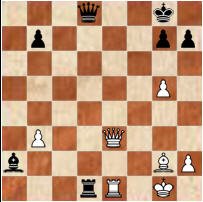
The short story, The Last Round by Kester Svendsen, was concurrently based on a most wonderful game I have seen in a long time. The game containing 3 sacrifices, two of which were Queens maybe the most poetic of games. The vividly game was apparently played between Rudolph Charuosek (White) and Jakob Wolner in Kaschua, 1893. Charuosek beat lasker quite easily and Lasker commented that he would have to play him again for the world title.
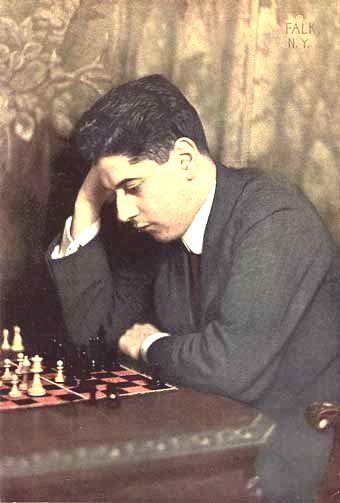
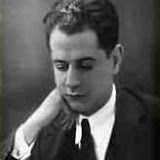
(Hungarian: Rezső Charousek) (Praga, 19 September 1873 – Budapest, 18 April 1900) was a Hungarian-Jewish chess player. A brilliant player, he had a tragically short career, dying from tuberculosis at 26. Reuben Fine described him as the John Keats of chess.

It was not long ago I wrote an article on another brilliant chess master IM Rashid Nezmehtdinov who could not play Lasker as contender for the world championship because of poverty. This was also the case with Charousek, he was so poor I doubt if he were still alive at the time would he have been able to afford to play Lasker.

Well here is the most wonderful game that has definitely made me a Charousek fan.
1. e4 e5 2. d4 exd4 3. c3 dxc3 4. Bc4 Nf6 5. Nf3 Bc5 6. Nxc3 d6 7. 0-0 0-0 8. Ng5 h6 9. Nxf7 Rxf7 10. e5 Ng4 11. e6 Qh4 12. exf7+ Kf8 13. Bf4 Nxf2 14. Qe2 Ng4+ 15. Kh1 Bd7 16. Rae1 Nc6 17. Qe8+ Rxe8 18. fxe8=Q+ Bxe8 19. Bxd6++

Download the game in pgn here
Puzzles from Charousek's games here